The global K-pop fandom isn’t just a phenomenon; it’s a force of nature, constantly evolving and expanding its reach across every continent. In 2026, we’re witnessing the culmination of years of dedicated effort from artists and agencies, amplified by the incredible passion of millions of fans worldwide. If 2025 was the year K-pop cemented its global dominance, with Billboard noting “17 Ways K-Pop Became More Global Than Ever” (Billboard, Dec 30, 2025), then 2026 is when the international fandom truly became an unstoppable engine, driving the Hallyu wave to unprecedented heights. It’s not just about catchy tunes anymore; it’s about a deeply interconnected community that transcends borders and languages.
The Unstoppable Global Surge: 2025’s Blueprint for 2026
The numbers don’t lie. K-pop’s international footprint in 2025 laid a powerful blueprint for the massive momentum we’re seeing in 2026. The IFPI’s Asia chief confirmed a staggering statistic on July 13, 2026, revealing that “15 of the IFPI’s top 20 global sales albums in 2025 were from Korea.” This isn’t just a win; it’s a complete takeover of the global album market, demonstrating that K-pop acts like BLACKPINK, NMIXX, and J-Hope, who were among Forbes’ “Most Acclaimed K-Pop Of 2025” (Forbes, Dec 31, 2025), aren’t just niche interests but global music powerhouses.

The expansion isn’t uniform, but it’s everywhere. Data from The Korea Herald on January 22, 2026, highlighted Korea, Japan, and Indonesia as top K-pop markets in 2025, but the growth isn’t limited to Asia. The sheer scale of international fan engagement is evident in the global success of tracks like “APT.,” which the IFPI’s Asia chief called “super exciting” (July 13, 2026). This kind of global reception for a single track underscores how international fandoms, from dedicated streaming teams to enthusiastic buyers, directly influence chart performance and artist visibility. The collective power of the international fandom in securing top chart positions, whether on Billboard Hot 100 or local streaming platforms, has become a defining characteristic of K-pop’s global strategy.
Beyond the Music: Content Crossovers Fueling Fandom
K-pop’s global reach isn’t confined to music alone; it’s a key driver of the broader Hallyu wave. The international fandom’s appetite for Korean content extends far beyond discographies, creating a synergistic effect that amplifies everything. Take “KPop Demon Hunters” for example. Time Magazine declared it the “Breakthrough of the Year 2025” (Time Magazine, Dec 9, 2025), and CNBC reported on November 4, 2025, that it was “boosting more than just Netflix: Korean music, politics ride the craze.” This crossover appeal means a fan discovering “Demon Hunters” might then explore the K-pop artists on its soundtrack or delve into the wider K-pop universe.
Similarly, the global popularity of K-dramas like “Teach You a Lesson,” which director Lee Jang-hoon noted in a 2025 interview drew “heavy inspiration” from institutional themes (July 8, 2026), creates new entry points for international fans. These K-dramas act as cultural ambassadors, introducing new audiences to Korean aesthetics, storytelling, and, crucially, the artists who often contribute to their original soundtracks. K-pop idols themselves frequently cross over into acting, further blurring the lines and drawing fans from one medium to another. This integrated content ecosystem means that the international fandom isn’t just supporting individual groups; they’re championing an entire cultural movement, solidifying K-pop’s place as a central pillar of global entertainment.
The Fandom Ecosystem: Powering Charts and Tours
The international K-pop fandom is a meticulously organized, passionate, and incredibly effective ecosystem. From comeback preparations to global tours, fan efforts are central to K-pop’s success. When a group announces a comeback, the international fandom mobilizes with unparalleled efficiency. Streaming goals are set, mass purchasing projects are organized, and social media campaigns are meticulously planned to ensure maximum visibility for new releases. This dedication directly translates into chart domination, as seen with countless K-pop acts consistently breaking into global charts like the Billboard Hot 100.

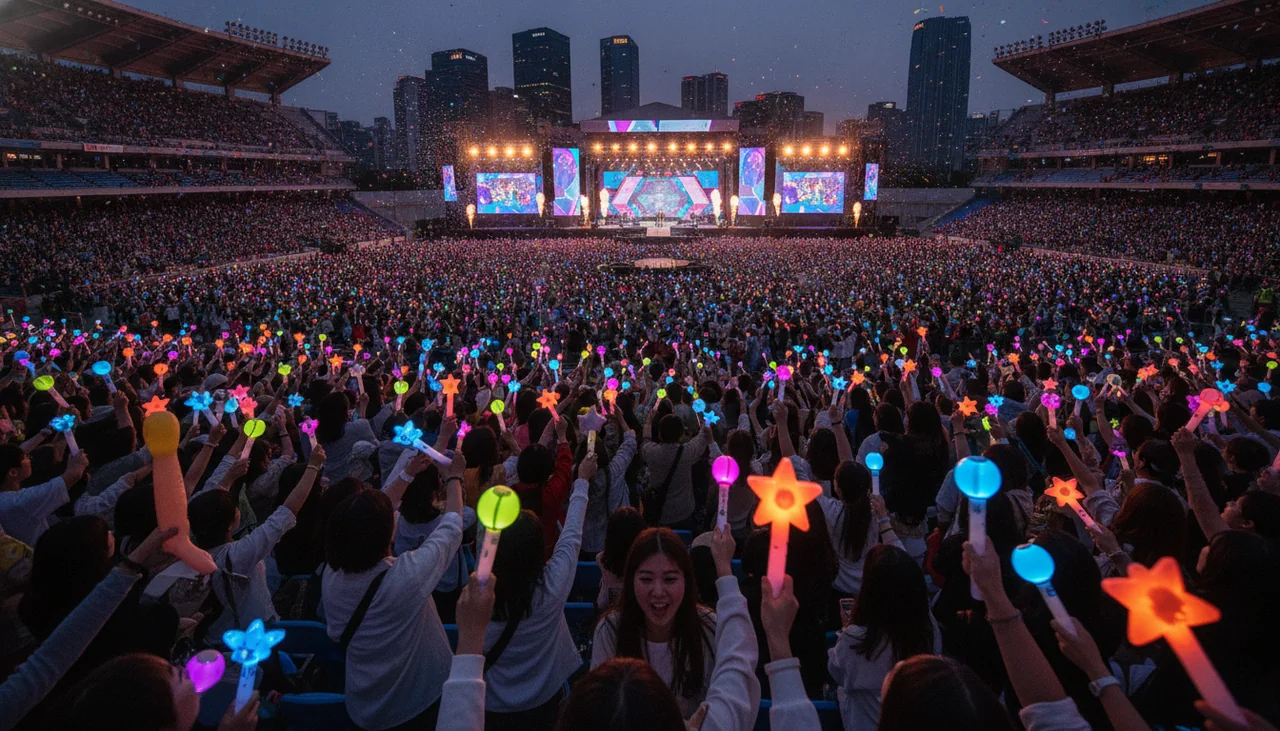
The global touring landscape in 2026 is another testament to this power. Iconic venues like THE O2 Arena in London, which hosted ‘SMTOWN LIVE 2025’ (Frontrow, July 18, 2026), are now regular stops for K-pop artists. The sight of thousands of international fans waving their lightsticks, singing along in Korean, is a powerful visual of this global unity. CEO Lee Hye-rim of Frontrow noted on July 18, 2026, that “K팝 공연, 티켓 판매를 넘어 데이터가 남아야 한다,” emphasizing that beyond ticket sales, the valuable data generated by these global events is crucial. This data reflects the sheer scale of international demand, informing future tour locations and marketing strategies. The collaborative nature of international fandoms, often coordinating across time zones via platforms like Weverse, ensures that every comeback feels like a global event, and every concert is a sold-out celebration.
Connecting the World: Language, AI, and the Future of Fandom
One of the most remarkable aspects of the international K-pop fandom is its ability to break down barriers, especially language. The IFPI’s Asia chief highlighted this on July 13, 2026, noting that K-pop is “breaking the language barrier,” and everyone is “excited about K-pop.” This isn’t just about fans learning Korean; it’s about a shared cultural experience that transcends linguistic divides. Fancams with translated captions, fan-made lyric videos, and dedicated translation accounts on social media bridge the gap, making content accessible to a truly global audience.
Looking ahead, artificial intelligence (AI) is set to play an even bigger role in connecting the global fandom. The IFPI’s Asia chief also mentioned on July 13, 2026, that “AI is t…” (likely referring to its role in enhancing global reach and engagement). AI-powered translation tools, personalized content recommendations, and even interactive fan experiences could further deepen the connection between idols and their international fans. This technological integration will make it easier for fans from diverse backgrounds to participate fully in fandom culture, whether it’s understanding a live broadcast or engaging in discussions on Weverse. The future of K-pop’s international fandom is one of ever-increasing accessibility and interconnectedness, powered by both human passion and technological innovation.
Tips for the Global Fan: Navigating the K-Pop Universe
For new and veteran international fans alike, navigating the vast K-pop universe can be both exciting and a little overwhelming. Here are some practical tips to maximize your experience in 2026:
1. Engage with Official Channels: Follow your favorite groups on Weverse, Twitter, Instagram, and YouTube. These are the primary sources for official news, comeback schedules, and exclusive content. Engaging there directly helps with chart performance and visibility. 2. Join Reputable Fanbases: International fanbases on platforms like Twitter or Discord are invaluable resources. They often organize streaming parties, mass purchasing projects, and provide timely translations, helping you stay informed and contribute to your group’s success. Be wary of sasaeng activity and prioritize healthy fan interactions. 3. Learn the Lingo: Understanding common fandom terms like “comeback,” “daesang,” “lightstick,” and “fancam” will deepen your appreciation and allow you to participate more fully in discussions. 4. Embrace the Content Crossover: Don’t limit yourself to music. Explore K-dramas like “Teach You a Lesson” or “KPop Demon Hunters” which often feature K-pop idols or contribute to the overall Hallyu experience. This broadens your cultural immersion and introduces you to new aspects of Korean entertainment. 5. Attend Virtual and Physical Events (When Possible): While not everyone can attend an SMTOWN LIVE concert at THE O2 Arena, many groups host online fan meetings or virtual concerts. These are fantastic ways to connect with artists and the wider fandom, even from afar. The energy of a live show, even a virtual one, is truly something special.
Quick Summary
The K-pop international fandom in 2026 is a testament to global connectivity and shared passion. Driven by the explosive growth of 2025, with 15 of IFPI’s top 20 global albums from Korea, this fandom powers chart domination for acts like BLACKPINK and J-Hope. Beyond music, content crossovers like “KPop Demon Hunters” and “Teach You a Lesson” draw in new fans, while dedicated fanbases coordinate efforts for comebacks and global tours like SMTOWN LIVE at THE O2 Arena. With K-pop breaking language barriers and leveraging AI, the future promises even deeper, more accessible connections for this unstoppable global community.
Found this helpful? Bookmark us! ⭐