You know the feeling. You’re on a bus, headphones on, the city blurring past your window as the bridge to your favorite song swells. You’ve sung along a hundred times, mimicking the sounds, feeling the rhythm in your bones. Then, it happens. A single word you just looked up last night—maybe *gaseum* (heart) or *yeongwonhi* (forever)—suddenly clicks into place, shining like a beacon in a sea of beautiful, unfamiliar syllables. In that tiny, electric moment, the song is no longer just a melody; it’s a conversation you’ve just begun to understand.
This experience is the unofficial entry point for millions of fans into the vibrant world of Korean culture, with K-pop serving as the most charismatic guide imaginable. For decades, the Hallyu, or Korean Wave, has been building momentum, but it’s the global explosion of its music that has transformed casual listeners into dedicated cultural explorers. The music doesn’t just stay in your headphones; it becomes a key that unlocks a door to a world of new words, incredible flavors, and breathtaking places. It’s a journey that often starts with a single chorus and can end with a plane ticket to Seoul, all because a song made you curious enough to ask, “What does that mean?”
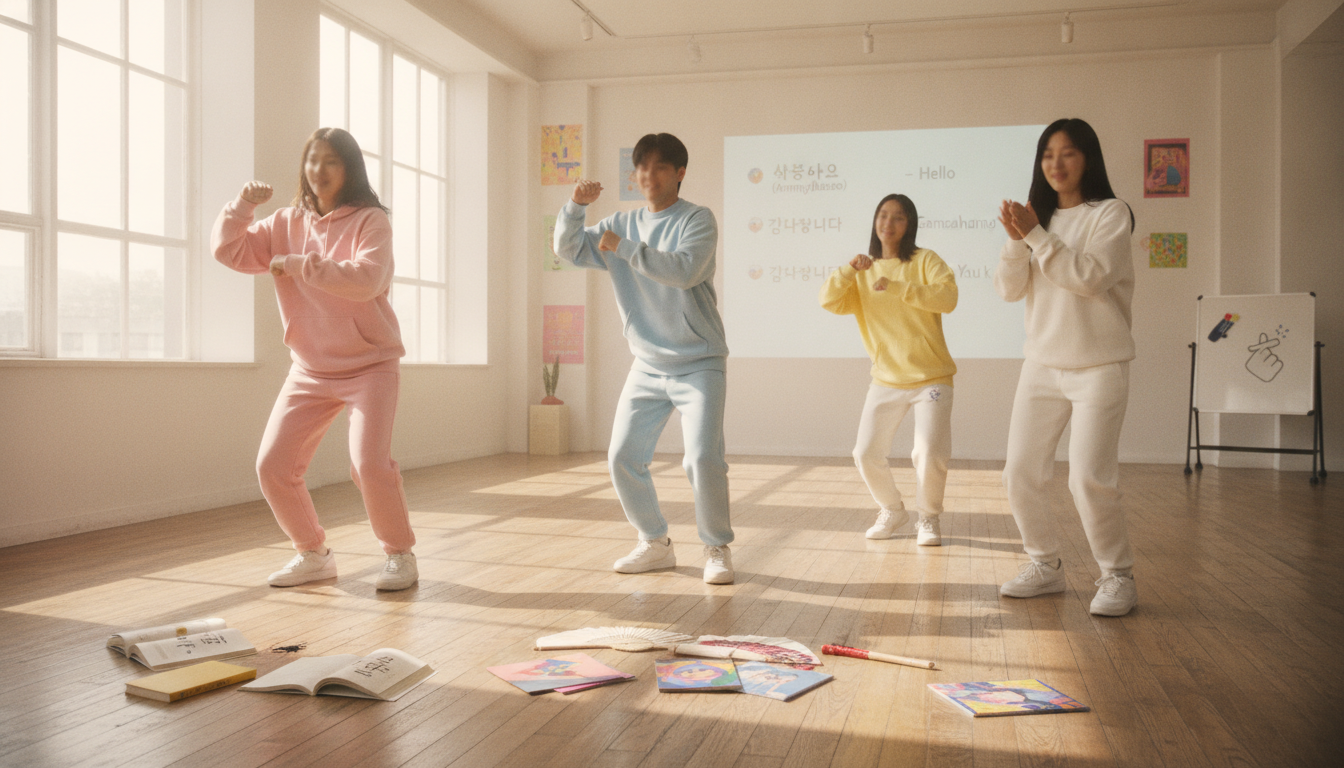
What makes this connection so powerful is how organically it unfolds. Think of K-pop lyrics as the most engaging set of flashcards you’ll ever own. You start by picking up essential greetings and phrases of affection that idols pepper into their fan interactions and songs: *annyeonghaseyo* (hello), *saranghae* (I love you), and *gomawo* (thank you). Soon, you find yourself recognizing words from title tracks in the casual banter of a V-Live broadcast. The daily vlogs and variety shows, like the chaotic fun of SEVENTEEN’s *GOING SEVENTEEN*, become your favorite classroom. You’re not just passively listening; you’re actively decoding, connecting a word an idol shouts in a game to the lyric you memorized last week. It’s a language-learning method powered by pure joy and affection, where the desire to understand what your favorite artist is truly saying becomes the ultimate motivation. This desire creates a beautiful feedback loop: the more you learn, the deeper you appreciate the artistry and emotional nuance packed into the songwriting.
From there, the cultural immersion deepens, often finding its way to the dinner table. It’s a bit like following a trail of cultural breadcrumbs left by your favorite artists. You’re watching a behind-the-scenes clip, and the members are refueling after a grueling practice with mountains of *samgyeopsal* (grilled pork belly), wrapping the sizzling meat in lettuce with a dollop of *ssamjang*. Their genuine delight is infectious. Before you know it, you’re looking up the nearest Korean BBQ restaurant, eager to experience that communal, comforting meal for yourself. The same goes for the comforting bowl of *jjajangmyeon* (black bean noodles) you see devoured in K-dramas, or the spicy, chewy *tteokbokki* (rice cakes) an idol eats from a street vendor in a travel vlog. K-pop doesn’t just tell you about Korean food; it shows you the joy, the context, and the community that surrounds it, making you a participant rather than just an observer.
This journey continues right into your wardrobe. Airport fashion, once a niche paparazzi interest, has become a global style lookbook for fans. An idol is photographed at Incheon Airport wearing a particular brand of oversized hoodie or a uniquely structured bag, and within hours, fan accounts have identified the items, and online stores see a surge in interest. This influence has turned entire districts in Seoul into pilgrimage sites. A walk through Hongdae, with its bustling streets filled with independent boutiques and streetwear shops, feels like stepping into the closet of your favorite group. You see the aesthetics from music videos come to life—the soft, minimalist knits, the edgy, layered streetwear, the bold accessories. It’s a tangible way to connect with the visual identity of the music you love, to bring a piece of that curated K-pop world into your own.
For fans across the world, this multi-faceted cultural connection creates a sense of community that transcends borders and language barriers. It’s a shared journey of discovery. On social media, you’ll find fans swapping recipes for *kimchi-jjigae*, offering tips for finding the best Korean cosmetics, or planning group trips to Seoul to visit music video locations and idol-owned cafes. K-pop acts as a powerful form of soft power, fostering a genuine, grassroots interest in a culture that might have otherwise seemed distant. It’s a testament to the idea that music can do more than entertain; it can educate, inspire, and, most importantly, connect us on a profoundly human level.
So the next time your favorite song comes on, listen just a little bit closer. Pick one word you don’t know and look it up. When you’re watching a variety show, try to catch a phrase without looking at the subtitles. This journey doesn’t require a huge commitment, just a spark of curiosity. That small step is all it takes to turn your playlist into a passport.
learning Korean with K-pop songs